Seventeen years after the first Bitcoin block was mined — and eighteen years since Satoshi Nakamoto’s white paper quietly appeared online — the financial world continues its remarkable transformation. What began as one person’s idea of digital money has grown into an ecosystem reshaping trust, ownership, and value.
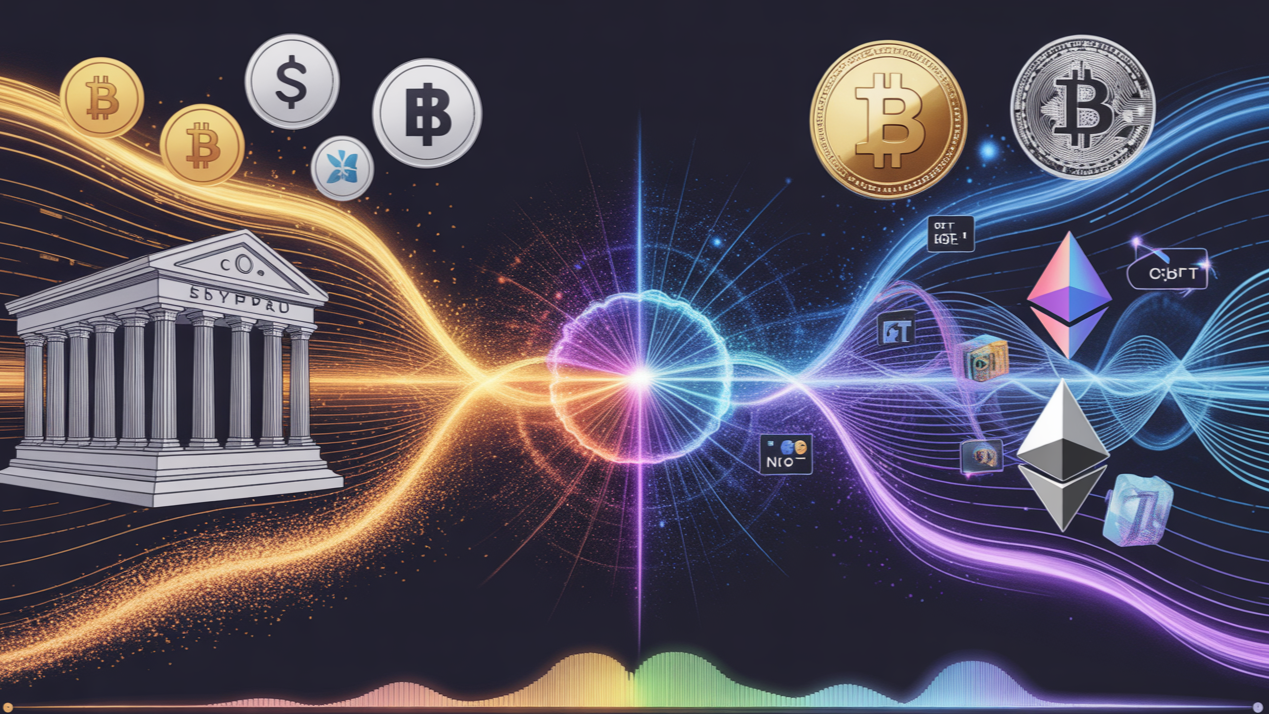
We now find ourselves at a fascinating point of convergence: decentralised technologies on one side, centralised financial systems on the other. Somewhere in between lies the new architecture of global finance — faster, smarter, and more inclusive than ever before.
From Rebellion to Reinvention
In the early years, most regulators saw cryptocurrencies as a passing storm. They warned about volatility, money laundering, and market manipulation. Some countries issued outright bans. For a while, “crypto” and “compliance” seemed like oil and water.
By the mid‑2010s, the tone shifted. Innovation sandboxes emerged in Singapore, the UK, India, the UAE, and Hong Kong — safe spaces to test blockchain and digital currencies without destabilising systems.
Consulting firms followed with “blockchain transformation” and strategy roadmaps. Enthusiasm sometimes moved faster than clarity, but it reflected a shared realisation: something important was taking shape.
The Era of Programmable Finance
Ethereum changed the conversation. Smart contracts made finance programmable and verifiable.
Decentralised Finance (DeFi) grew from that foundation — open systems offering lending, trading, and investing without traditional intermediaries. Leading protocols like Aave, Uniswap, and MakerDAO have processed billions in value, proving DeFi’s potential while raising questions on governance and regulation.
Stablecoins then played a crucial bridging role. By linking digital networks to familiar currencies like the US dollar or euro, they enabled trading, DeFi activity, and cross-border transfers without the extreme price swings of traditional crypto tokens. In many ways, they became the transactional glue connecting exchanges, wallets, and emerging institutional pilots in tokenised deposits and settlement.
Tokenised Real-World Assets (RWAs) began reshaping ownership. Bonds, real estate, and even art are now issued as digital tokens, enabling fractional ownership and faster settlement.
Major institutions appear no longer on the sidelines. Here are a few examples:
- BlackRock (BUIDL tokenised fund on Ethereum)
- Goldman Sachs (tokenised money market funds with BNY)
- JPMorgan (Onyx blockchain platform)
- Société Générale (tokenised bonds and digital asset initiatives)
These initiatives send a clear message: tokenisation is moving from proof‑of‑concept to production.
The Great Hype Cycle: NFTs and the Metaverse
Between 2020 and 2022, NFTs and the Metaverse captured global attention. Digital art sold for millions. Virtual land was auctioned. Brands rushed to build experiences in digital worlds.
Then the cycle turned. Valuations fell, speculation cooled, and many projects went quiet.
Yet the core idea remained valuable: proving digital ownership and provenance independently of any single platform or institution. That capability is now influencing digital rights, supply‑chain transparency, and enterprise tokenisation.
Centralisation Strikes Back
While decentralised systems made headlines, centralised infrastructure evolved quickly in parallel.
Instant payment rails such as India’s UPI, Singapore’s PayNow, the UAE’s Aani, and Pakistan’s Raast enabled real-time, low-cost payments for consumers and SMEs. They showed that speed, inclusion, and reliability can thrive in centralised models when built with openness and interoperability.
Beyond national systems, new players emerged. Banking Circle, often described as “the Bank for Fintechs,” built API-driven infrastructure that enables fintechs, payment providers, and corporates to access cross-border payment capabilities without requiring full banking licenses.
Central banks stepped in with CBDC pilots across Asia, Europe, and Latin America, while SWIFT began exploring how to interlink local instant‑payment systems and digital assets.
The narrative has shifted: it’s no longer centralised vs decentralised — it’s how they converge.
A Mirror of Life’s Broader Evolution
This movement between structure and freedom isn’t new.
- Societies have shifted from tribes → empires → democracies.
- Technology has shifted from mainframes → PCs → cloud → edge computing.
- Nature thrives through decentralised coordination — from ant colonies to neural networks.
Finance is following the same rhythm: searching for balance between innovation and accountability.
AI and Quantum Computing: The Next Wave
Two emerging forces now shape this convergence: Artificial Intelligence and Quantum Computing.
AI is already supporting compliance, fraud detection, risk analytics, and customer experience. Used well, it amplifies human judgment. Used poorly, it concentrates opaque decision‑making into algorithms that few can explain.
Quantum computing carries similar duality. It promises breakthroughs in analytics and optimisation, but it also threatens today’s encryption standards — including those securing blockchains and payment networks.
Security and governance must evolve ahead of these shifts, not behind them.
How Leaders Can Navigate the Convergence
For senior leaders, this is not just a technology conversation. It’s about strategy, trust, and execution.
- Build adaptable technology foundations Design modular, interoperable, and secure systems that can integrate new capabilities without constant rebuilds. Flexibility is your long-term hedge.
- Make cybersecurity a culture, not a checkbox Move from annual exercises to continuous practice. Prepare for a quantum-ready world, and promote shared responsibility for security across the organisation.
- Let business priorities drive technology adoption Adopt tokenisation, APIs, DeFi concepts, or CBDCs only when they clearly improve efficiency, transparency, or customer outcomes — not just because they’re trending.
- Keep people at the centre Customers care about ease, trust, and value — not protocols. The success of UPI and PayNow came from simple, reliable experiences, not technical terminology.
- Strengthen governance and compliance early Bring your governance, risk, and compliance teams into innovation conversations from day one. Sustainable transformation needs strong guardrails, not after-the-fact fixes.
Leading the Next Chapter
Centralisation and decentralisation are no longer rivals; they are now complementary forces shaping the next era of finance.
AI will bridge intelligence and automation. Quantum computing will reshape our assumptions about security. Stablecoins and tokenisation will change how capital is formed and transferred. Platforms like Banking Circle will blur the lines between banks, fintechs, and infrastructure providers.
Finance, like life, evolves through cycles of disruption and balance — curiosity, correction, and convergence.
The leaders who will thrive are those who:
- innovate boldly but govern wisely,
- embrace speed but preserve trust,
- and never lose sight of the human at the centre of every transaction.
💬 How do you see this convergence playing out in your organisation or industry?
Reference Examples:
DeFi Protocols – Aave | Uniswap | MakerDAO
Tokenised RWAs – BlackRock BUIDL | BNY & Goldman | JPMorgan Onyx | Société Générale
Payments & Infrastructure – MAS PayNow | India UPI | UAE Aani | Pakistan Raast | Banking Circle | SWIFT
About the author
Viren Mantri is a Technology, Cyber, and Risk Leader with nearly 30 years of experience across global banks, advisory, and fintech ecosystems, focusing on digital assets, payments, and resilient financial infrastructure.
CC-BY Viren Mantri, 2026, licensed under a Creative Commons Attribution 4.0 International License.
Disclaimer: All views expressed here are entirely mine.