Biosafety, biosecurity, and bioterrorism risks are real. AI governance is lagging the science.
Last year
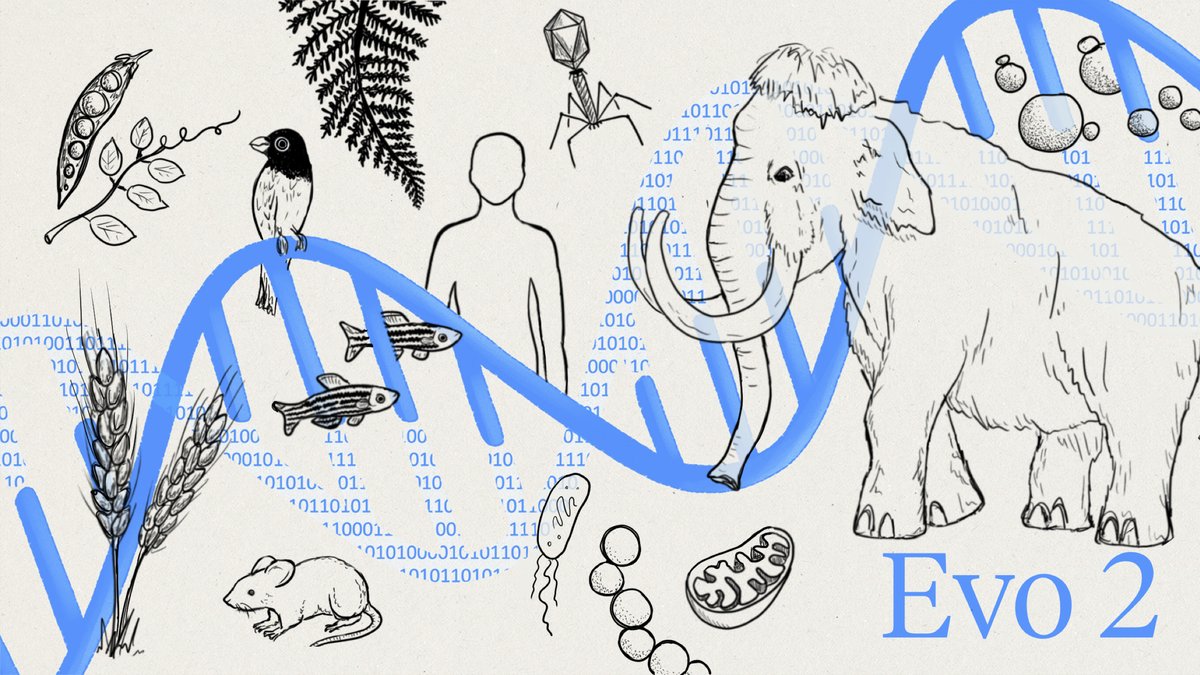
Evo 2 was released. Arc Institute developed the largest AI model for biology to date in collaboration with NVIDIA, bringing together Stanford University, UC Berkeley, and UC San Francisco researchers. Trained on the DNA of over 100,000 species across the entire tree of life. Over 9.3 trillion nucleotides, the building blocks that make up DNA and RNA, drawn from over 128,000 whole genomes.
Open source, catching on like wildfire
Tens of thousands of model downloads. 380 GitHub forks. Millions of API requests on Hugging Face. The training dataset alone has crossed 48,000 downloads. All in one year.
This year
Earlier Evo models were already used to design working CRISPR gene-editing systems from scratch. Stanford and Arc Institute researchers have now used Evo 2 to design synthetic bacteriophages at the genome scale. Phages are viruses that infect bacteria and are being explored as an alternative to antibiotics.
Some of the AI-designed viruses have outperformed the natural templates they were modelled on.
What sets Evo 2 apart
- Predicts genetic disease effects
- Analyses genomes across species
- Models 3D genome structure
- Learns in-context from biological examples
Bottom line
The capability is here. The blueprint is public. The guardrails are not.
Sources:
- Arc Institute, AI can now model and design the genetic code for all domains of life with Evo 2 (Feb 2025): https://arcinstitute.org/news/evo2
- Arc Institute, Evo 2 One Year Later (Mar 2026): https://arcinstitute.org/news/evo-2-one-year-later
- Building Evo 2: A Language Model for DNA Generation (Mar 2026): https://www.youtube.com/watch?v=o_w-E–u7GQ
- Image credit: The Arc Institute (https://arcinstitute.org)
About the author
Viren Mantri is a cybersecurity advisor and former senior technology leader across Standard Chartered, UBS, McAfee, and KPMG. After three decades at the intersection of technology, risk, and regulation, he now helps organisations cut through complexity and make better security decisions.
CC-BY Viren Mantri, 2026, licensed under a Creative Commons Attribution 4.0 International License.
Disclaimer: All views expressed here are entirely mine.